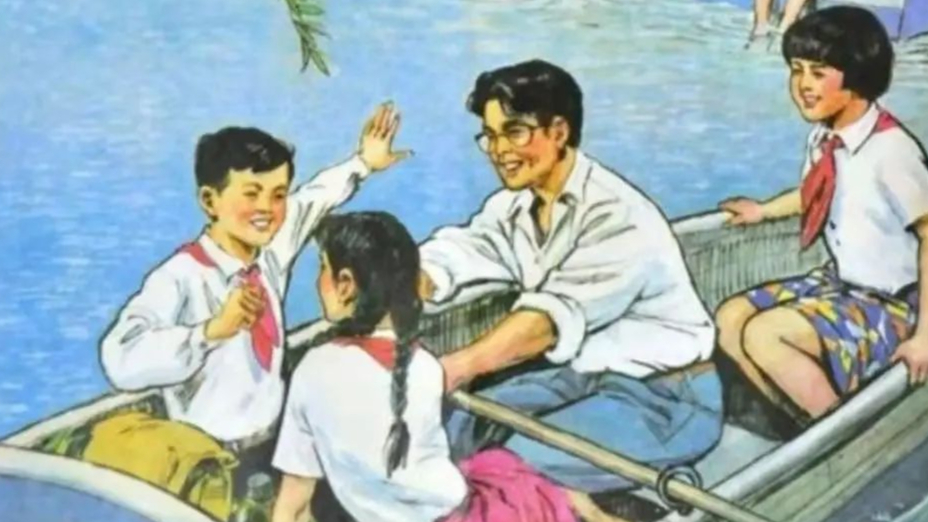
Let Us Sway Twin Oars
Introduction
Let Us Sway Twin Oars is a celebrated Chinese song by the renowned songwriter Qiao Yu and composer Liu Chi. The song, which debuted in the 1955 children's movie Flowers of Our Motherland, has become a significant piece of Chinese cultural heritage. It is particularly noted for its depiction of the joyful experiences of children boating in Beihai Park, Beijing, reflecting the happiness and optimism of the Chinese people in the post-1949 era. The song's enduring popularity has led to its inclusion in music education curricula across China, making it a staple in Chinese primary and middle school music classes.
Origins
Let Us Sway Twin Oars was conceived during a period of cultural renaissance in China following the establishment of the People's Republic in 1949. The song is featured in Flowers of Our Motherland, a film widely regarded as the first children's movie post-1949, and it captures the essence of the newfound joy and freedom experienced by the Chinese people. The film and the song both celebrate the exuberance of childhood and the idyllic scenes of children enjoying leisurely boat rides in Beijing's Beihai Park, a reflection of the peaceful and prosperous life that was envisioned for the new nation. This imagery and sentiment underscore the inspiration behind the song's creation.
Musical Composition
Lyrics
The lyrics of Let Us Sway Twin Oars are characterized by their simplicity and charm, capturing the carefree spirit of childhood. They vividly describe the scene of children rowing boats and enjoying nature, using language that is both poetic and accessible. This simplicity resonates with audiences, making the song easy for children to learn and sing, thereby ingraining it in the collective memory of the nation.
Melody
The melody of Let Us Sway Twin Oars complements its lyrical content with a light and buoyant tune. It incorporates traditional Chinese musical elements, creating a sound that is both familiar and comforting. The song's melodic structure is designed to be catchy and memorable, encouraging participation and sing-alongs, which has contributed to its enduring popularity in music education and cultural events.
Performances and Adaptations
Historical Performances
Since its release, Let Us Sway Twin Oars has been performed at numerous cultural events and celebrations throughout China. It has become a fixture in performances by children's choirs and school recitals, cementing its status as a beloved piece of Chinese musical heritage. The song's performances often evoke nostalgia, celebrating the innocence and joy of youth.
Modern Interpretations
In modern times, Let Us Sway Twin Oars continues to be reinterpreted by contemporary artists and ensembles. Its adaptability to different musical styles and formats has allowed it to remain relevant in today's cultural landscape. Recent performances have included choral arrangements and orchestral versions, showcasing the song's versatility and its ability to connect with new audiences while preserving its original charm. Photo Gallery(2 pictures)CategoriesArtsTagChinese MusicRelatedQiao YuCatalogue1. Introduction2. Origins3. Musical Composition4. Performances and Adaptations- - - []








